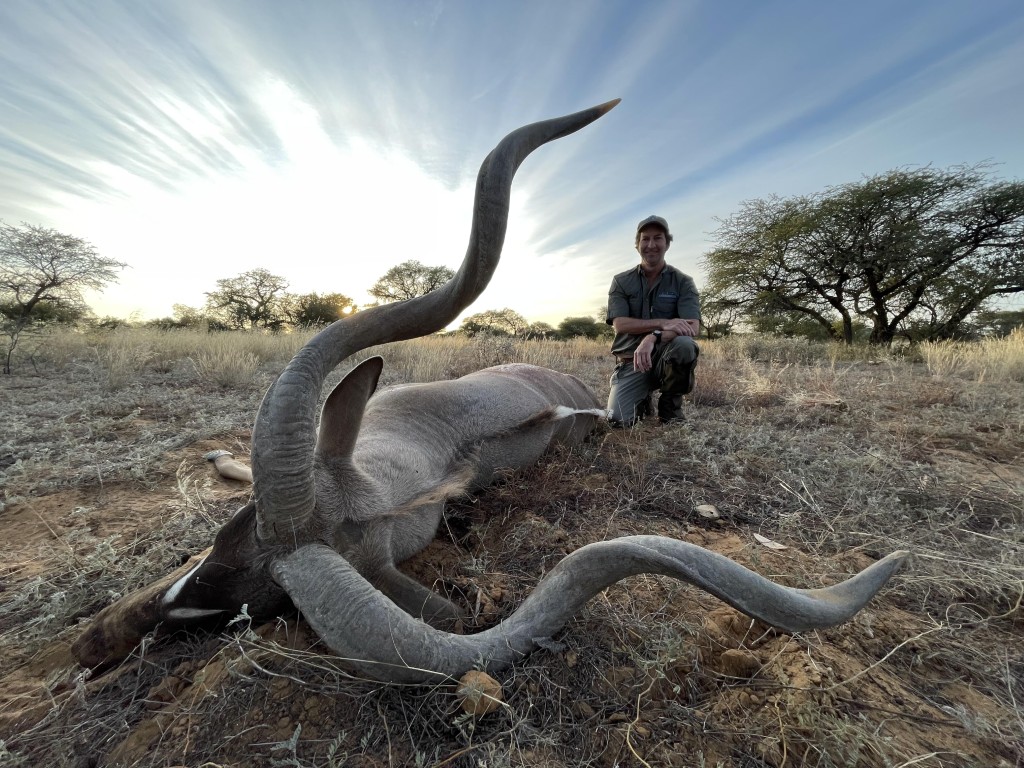
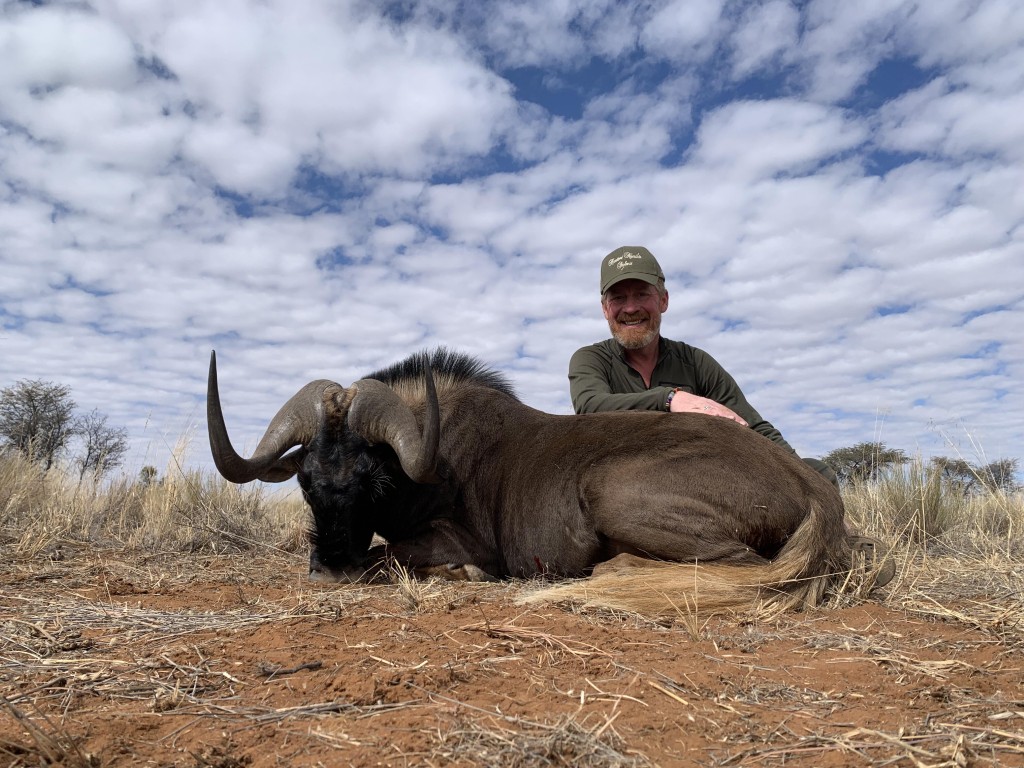
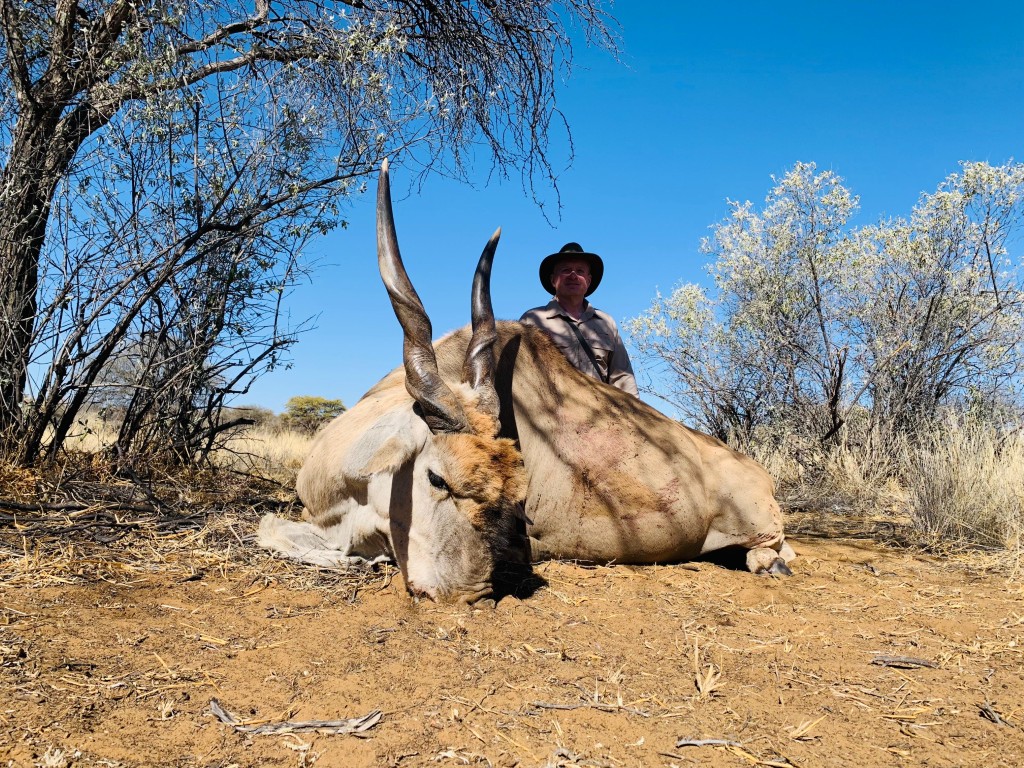
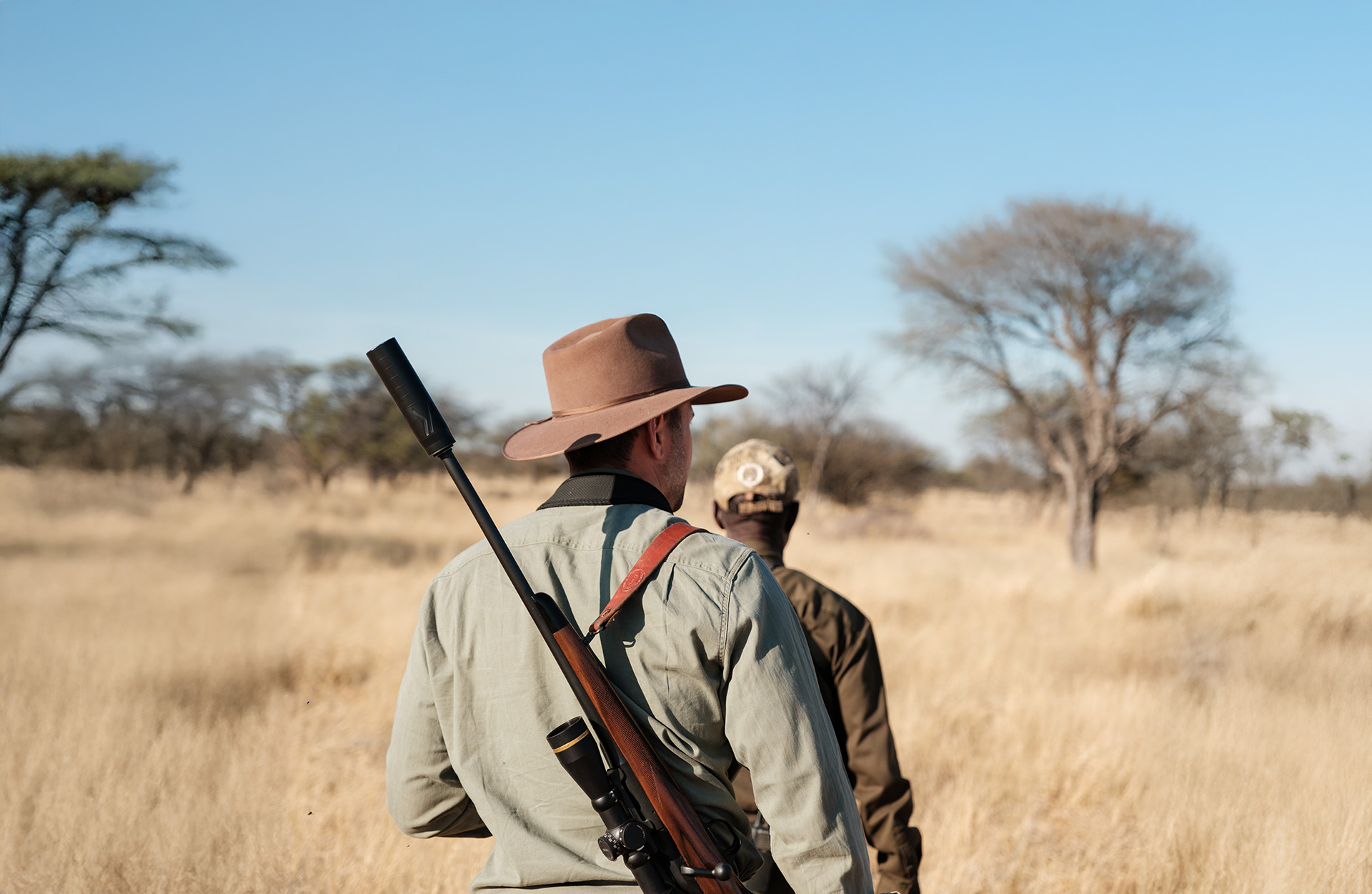
Hunting at Hunters Namibia Safaris is guided by a philosophy of respect, conservation, and tradition. We practice only fair-chase hunting, conducted entirely on foot in the classic spot-and-stalk style. Every encounter is earned, ensuring that the hunt remains an authentic and deeply personal pursuit.
We focus exclusively on mature, post-reproductive animals — old, heavy-horned specimens that have lived full lives in the wild. We are not “inch hunters” chasing measurements, but conservationists who value age, character, and the integrity of the hunt.
The varied terrain — from open plains to rugged kopjes and thick bushveld — offers both challenge and diversity, demanding skill, patience, and adaptability from hunter and guide alike. Trophy quality is consistently outstanding, with clients averaging one trophy per day, though there is no limit to the number of species pursued.
We recommend safaris of 10–14 days to allow the rhythm of the veld to unfold naturally, though a minimum of 7 hunting days is required. Certain species, such as leopard and cheetah (note: cheetah trophies cannot bevimported into the USA), require a minimum of 14 days.
Every safari is conducted with integrity, patience, and reverence for the land — ensuring your time here is both personally rewarding and a lasting contribution to conservation.
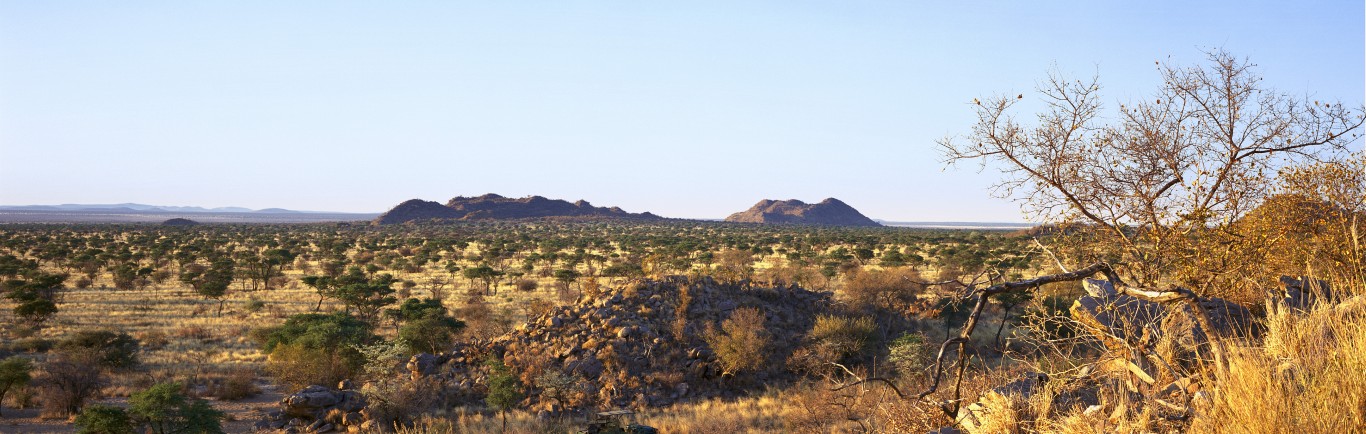
Only forty-five minutes from Windhoek International Airport lies a wilderness unlike any other — 80 square miles of pristine Camelthorn Kalahari, privately owned and carefully stewarded by the Lamprecht family for over four decades.
Fourteenth-generation Africans, the Lamprechts have dedicated their lives to preserving this land in its natural state, ensuring it remains a sanctuary of abundance and authenticity.
The terrain is as diverse as it is striking: vast golden grass plains scattered with ancient camelthorn trees, rugged hills and rocky outcrops, dense bushveld thickets, and sweeping open flats.
This variety of habitats allows game to thrive naturally, creating a true wilderness where wildlife is entirely free-ranging and self-propagating.
To safeguard both the land and its wildlife, we host no more than ten hunting parties each year. This rare exclusivity ensures not only exceptional trophy quality, but also a safari experience defined by authenticity, challenge, and the untamed spirit of Africa.
Every safari is guided by one of Namibia’s finest Professional Hunters — men of exceptional skill, with decades of experience and reputations that are respected throughout the country.
Their deepknowledge of the land, wildlife, and traditions of fair chase hunting ensures not only success in the field but also an enriching experience filled with insight, camaraderie, and unforgettable stories.
Each P.H. hosts no more than two hunters at a time, guaranteeing personal attention and guidance of the highest standard.
For the hunt itself, classic open Toyota Land Cruisers are used for transport, while all stalking is conducted on foot in the true spirit of fair chase. Each vehicle is immaculately maintained and fully outfitted with first aid kits, tools, two-way radios, electric winches, and refreshments to ensure both safety and comfort in the wilderness.
Huntable Species List
Baboon
Oryx (Namibian)
Roan (Southern)*
Cheetah
Sable (Southern)*
Dik-Dik (Damara)*
Springbuck (Kalahari)
Duiker (Common)
Steenbuck
Eland (Cape)
Warthog
Giraffe
Waterbuck (Common)
Hartebeest (Red)
Wildebeest (Black)
Impala (Black-faced)
Wildebeest (Blue)
Impala (Southern)
Klipspringer
Zebra (Burchell)
Zebra (Hartmann)
Kudu (Southern)
Wingshooting in Namibia
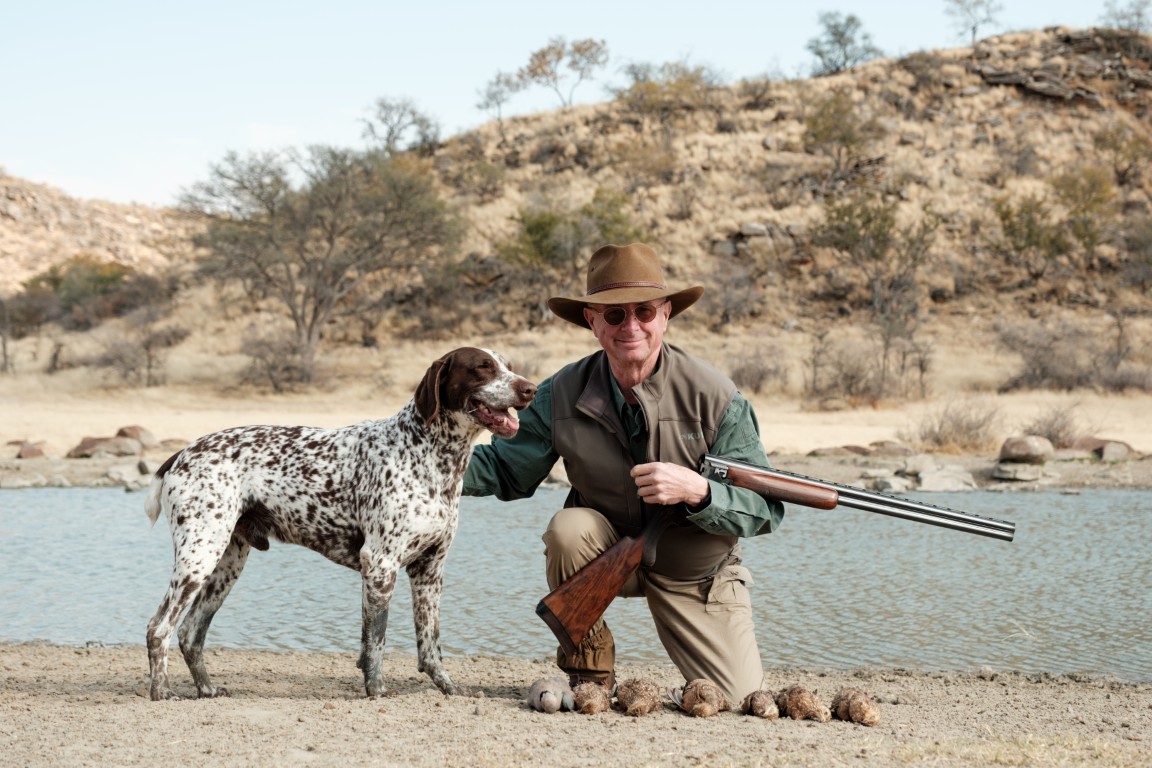
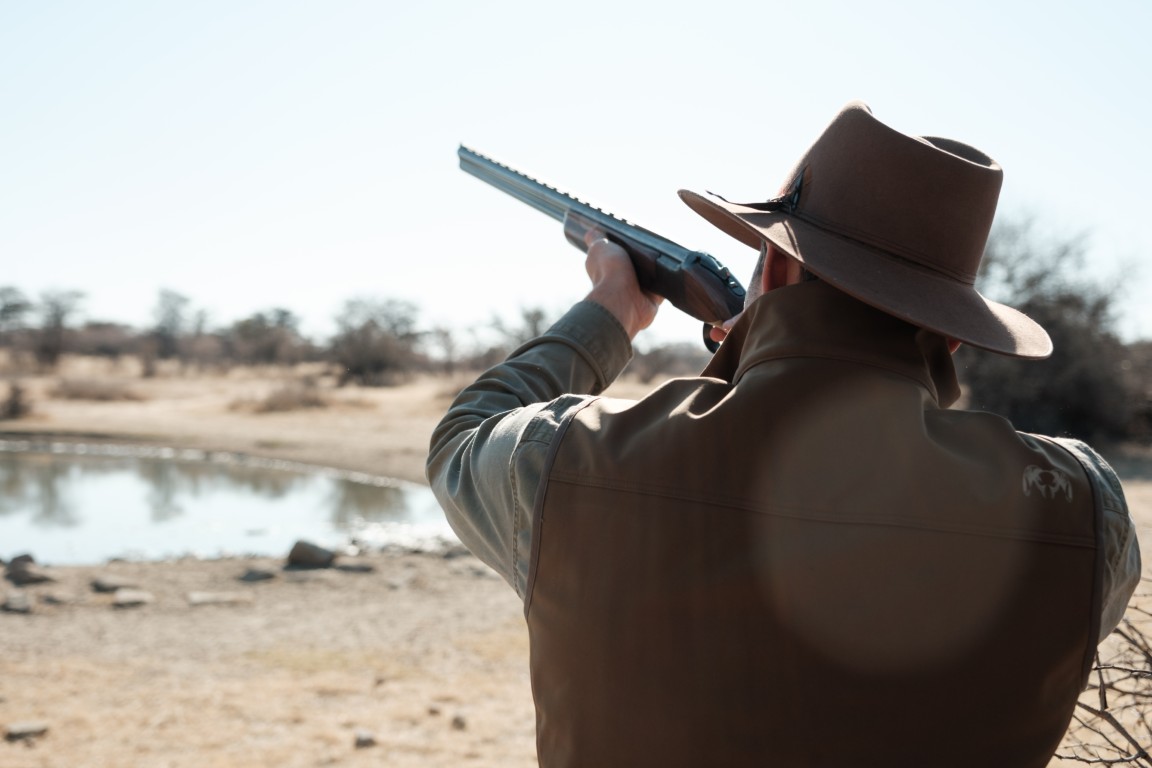
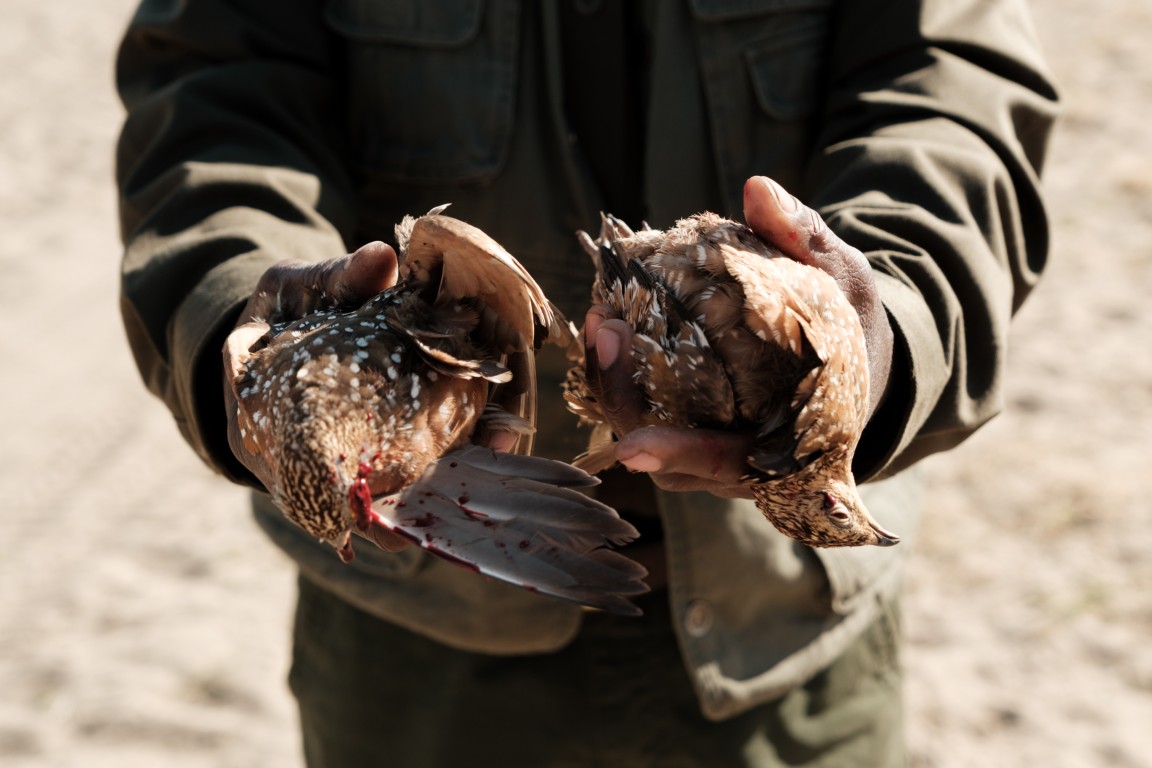
Wing shooting in the Camelthorn Kalahari offers a challenging and rewarding complement to plains game hunting. Guineafowl and francolin are pursued on foot through the bush, while all three of Namibia’s sandgrouse — Burchell’s, Double-banded, and Namaqua — provide some of the most exciting bird shooting in Africa.
Each morning around nine o’clock, flights of sandgrouse sweep in high and fast, circling the water before settling, and offering a thrilling challenge even to the most experienced bird hunters. A bush breakfast at the water’s edge makes the spectacle all the more memorable. Though Namibia’s arid climate means bird numbers are not vast, the hunts are highly sporting and deeply rewarding.
Bird Hunting Season in Namibia by Species
Helmeted Guineafowl: 1 June – 30 September
Red-billed Francolin: 1 May – 31 August
Cape Turtle Dove: 1 May – 31 October
Namaqua Sandgrouse: 1 September – 30 November
Double-banded Sandgrouse: 1 September – 30 November